
HDB Entryway Reset: A Five-Minute Routine for Small Flats
Table of Contents
You come home with two bags of groceries and have to put one down before you can close the door. The space you need is occupied by yesterday’s shoes. When you leave the next morning, your keys are under a receipt on the dining table.
An HDB entryway reset starts with that trip through the door. Choose where each thing goes while you are still carrying it, then give the entrance five minutes at the end of the day.
Start with your existing furniture. This guide covers the first setup, the nightly reset and what to change when the layout works on paper but falls apart on a rainy Tuesday.
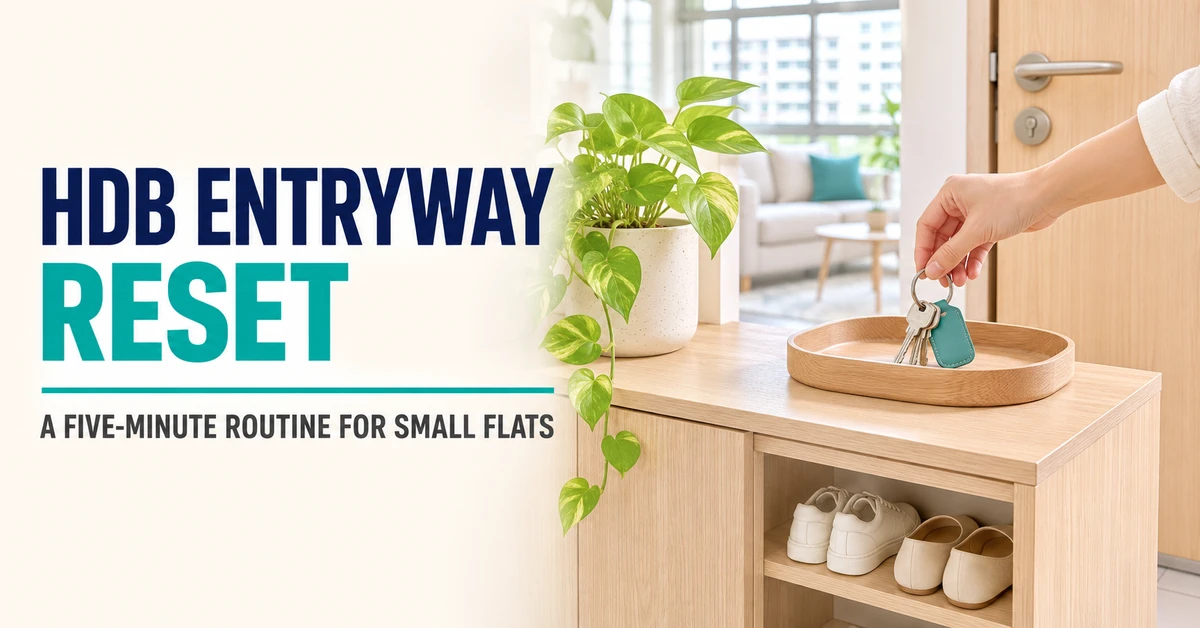
Start here. Put a dish for keys on the first surface you can reach after closing the door. Give everyday shoes a defined spot out of the walking route and put the bag where you naturally set it down. Test the arrangement with groceries in both hands before buying a rack or bench.
Why HDB Entryway Storage Gets Messy Again
A cabinet solves the problem of where things can fit. Your entrance has a different problem. It needs to accept whatever arrives when your hands are full. If reaching the cabinet means walking around the open door or moving a stool, shoes will keep stopping short of it.
Watch what happens between opening the gate and walking into the rest of the flat. A bag that repeatedly lands on a dining chair tells you the chair is easier to reach than the intended storage spot. A card left on top of the shoe cabinet suggests the top surface could do a job that the drawer beneath it does poorly.
Use three categories when you look at the pile. Daily gear includes the shoes, bag and keys you expect to take out again tomorrow. Things in transit are parcels, returns and letters that need one action before they leave the entrance. Stored gear includes occasion shoes, spare totes and bags you only use on weekends. These three groups need different amounts of space and different levels of access.
A useful rule for a small HDB foyer is to reserve the easiest positions for the things with the quickest turnaround. A drawer that is awkward to open can still hold a spare tote. It will frustrate you if it holds the keys you need while carrying breakfast and heading out the door.
What you need for the first setup
One shallow tray or dish. Try a saucer, small food container or spare drawer organiser. You want to pick up a key ring in one motion, with enough room to see whether the access card is underneath it.
One reachable place for the bag you carried today. This can be an existing low shelf or a sturdy hook already installed for that load. Try it with the bag full. A spot that only works after you empty the bag adds a step at the point when you are least likely to do it.
One clearly defined shoe area. Use a shelf in a shoe cabinet, a washable tray or a short stretch of floor beside the wall that sits outside the walking route. Set capacity based on who actually uses the door daily. Store other pairs deeper inside the flat.
One temporary spot for things in transit. Use a small open basket, folder or a clearly defined corner of a nearby counter. Keep wet items out of this spot. Pick a size that makes it obvious when there is something to deal with.
A tape measure or a sheet of paper for marking boundaries. You can start with either. Mark the floor area a piece of furniture would occupy and repeat your normal arrival. Include doors, drawers and handles in any final measurements.
The trial costs S$0 if you use items you already own. If you eventually need to buy one thing, use the week to find out what job the purchase has to do. A narrow cupboard is a poor answer if the only real gap is somewhere to put a dripping umbrella.
The full HDB entryway reset, step by step
Step 1 — Walk your normal route (5 minutes)
Start outside with the bag you typically carry. Enter, close the gate and door as you normally would, take off your shoes and head towards the kitchen or bedroom. Ask a second household member to repeat the route if you share the flat. Note where you turn, where you pause and where your free hand can comfortably reach.
Repeat with a bulky item such as a laundry basket or shopping bag. Open any cabinet doors or drawers that face the route. A spot can look generous with everything closed, then feel too narrow once someone bends to put away shoes. If two people regularly come in together, run the test together.
In a flat with the door straight into the living room, look at the nearest usable wall or end of a sideboard. In a recessed entrance, look past the swing of the door. You should be able to set your things down while leaving a clear way through.
What you end up with is a rough map of one clear route and one reachable landing point. Take a quick photo to make it easier to compare setups later.
Step 2 — Sort by what happens next (8 minutes)
Gather the loose items that accumulate in the entrance and put them on a nearby surface. Pick out tomorrow’s keys, bag and shoes first. These are the items your setup needs to accommodate even if you stop here.
Separate the rest into items that have a home elsewhere and items that need a decision. Put the first group away. Give the second group a destination and a trigger. For example, a parcel to return goes in the transit spot until your next trip past the drop-off point. A bill you need to act on goes where you usually pay bills.
Check every pair currently by the door. Keep the pairs people will use before the next reset within easiest reach. When a household needs multiple everyday pairs, assign a shelf or section to each person. This makes it easier to see whose capacity is running out without moving someone else’s things.
What you end up with is a small set of things to place deliberately, plus a short queue of unfinished tasks.
Step 3 — Fit your landing point to the layout (10 minutes)
Try the key tray at the place you identified in step one. Reach for it with your bag still on your shoulder. If you have to cross the doorway again, try the nearest surface on the other side. Set the bag down and check that its straps stay clear of where people walk.
For a narrow entrance, start with one surface already inside the flat. An end of a sideboard can serve as a no-drill entryway. A cabinet drawer can work for a spare umbrella or tote if it opens without blocking people. If the entrance has room for a seat, try sitting down and standing back up with shoes and bags in their normal positions before committing space to it.
In a household with children, put the things they handle at a height they can actually use. For older adults, place frequently used gear where they can reach it comfortably and test the route with any walking aid they use. Let the people who use the entrance decide what feels awkward.
What you end up with is a separate home for keys, daily bags and shoes. Use that setup on an ordinary workday before you move on to décor.
Step 4 — Plan for rain and deliveries (5 minutes)
Give wet items somewhere to go as soon as you come in. A stable, washable container inside the flat can catch drips while you put the rest of your things down. Move the umbrella to a suitable drying spot when you have a free hand, and empty the container if water collects. Let wet footwear dry before returning it to enclosed HDB shoe storage.
Choose where you open deliveries. If you normally open parcels in the kitchen, put new boxes on the designated kitchen surface when you arrive. Decide there whether the box gets reused, recycled where appropriate or disposed of. This keeps the entrance from doubling as a holding area for packaging.
Keep your routine inside the flat. If you are considering a shoe rack in the shared corridor, check your block’s arrangement with the Town Council. SCDF calls for a minimum 1.2 m clear escape passage where shoe racks are permitted and requires stairs and immediate landings to stay clear. Read the SCDF guidelines for residential estates.
What you end up with is a routine that still works when the load arriving at the door changes.
Step 5 — Run the five-minute nightly reset
Use a cue you already have, such as putting away dinner dishes or closing the living room windows. Set a timer if it helps keep the job small. Split the work into the following passes.
- Clear the route. Move loose shoes into their spots and take parcels to their destination. Check where a strap or umbrella handle sticks out.
- Restore the tray. Put keys and cards back. Move loose receipts to the place where you handle expenses or discard them when you no longer need them.
- Prepare the bag. Put tomorrow’s tote, library book or return with the bag you expect to take. Deal with wet gear while you are there.
- Finish one transit item. Open the letter, carry the package to the right room or set the return next to your packed bag.
- Look back from the door. Check whether you can close it, turn and walk through without moving something first. Check that the person leaving earliest can find their gear.
If the timer runs out, leave larger jobs for another time. One overfull cupboard can consume the whole session. Write down the specific issue and keep the daily reset focused on making tomorrow’s departure easier.
Example — Two arrivals, one narrow entrance
Suppose one adult cycles to work and the other takes the MRT. The cyclist comes back with a helmet and a damp jacket. The other arrives with a laptop bag and groceries. Start by giving the helmet a shelf near the place where the jacket dries. Give the laptop bag a separate spot along the route to the desk, where it will be easy to retrieve in the morning. Keep the key dishes together only if both people can reach them with the door closed. On the next wet evening, try the routine with both adults arriving within a few minutes of each other. If they need the same patch of floor to put things down, move one bag spot farther inside the flat.
The full time breakdown
These are planning estimates for one entrance. They exclude sorting an entire shoe collection, mounting furniture or moving a cabinet.
| Task | First setup | Nightly reset |
|---|---|---|
| Walk the route and mark the clear area | 5 minutes | Final check |
| Sort daily gear and items in transit | 8 minutes | 2 minutes |
| Fit the tray, bag spot and shoe area | 10 minutes | 2 minutes |
| Set up rain and parcel handling | 5 minutes | 1 minute as needed |
| Total | About 28 minutes | About 5 minutes |
Judge the result by three moments. Can you come in with groceries? Can everyone find the things they need the next morning? Can you restore the entrance in one short pass? If two answers are yes and one is no, change the failing spot before changing the whole layout.
Where this entryway organisation system runs out of room
It cannot store an entire household’s shoes beside the door. If pairs regularly spill past their assigned area, choose which pairs genuinely need to stay within reach. Seasonal or occasion footwear can move to another storage zone.
It cannot create a recess where there is none. A flat whose entrance opens into a tight living area may work best with daily gear split across two nearby spots. Keys can go on the first reachable surface while bags live farther inside. Both positions should still make sense on the arrival route.
It cannot fix a poorly placed fixture. If a loose mat catches the door or a cabinet opens across the only path, change the layout. A nightly reset cannot make an awkward route comfortable.
It works best when the household agrees on the few shared rules. Show people where their things go and ask what would make the routine easier. Agreeing where to put keys is a more manageable first step than redesigning everyone’s storage at once.
Four adjustments to try after a week
Use separate dishes if keys get mixed up. Two small bowls can be easier to scan than a single larger tray. If a person needs their card at a different exit time, keep it with their own keys.
Move the bag spot towards the first landing point. If the bag keeps landing on a chair, try a nearby shelf at a similar height. Check it with the bag at its fullest and keep straps contained.
Give outgoing items a departure date. Put a reminder on a parcel you plan to return by the weekend. If it has no next action, move it out of the entrance until you decide what to do with it.
Let the shoe area show you when it is full. Count how many pairs fit comfortably with room to pick up one pair. Use that number as capacity. If shoes have to be stacked to squeeze in the last pair, that pair belongs somewhere easier to maintain.
The S$0 version for a flat with no foyer
Put an existing dish on the corner of the first usable surface inside the flat. Keep today’s shoes in a defined spot away from the door swing. Give the daily bag a position on an existing shelf, and use a folder for outgoing papers. A cardboard box can stand in for a transit basket during the trial.
This setup has a small footprint, but the tray and the bag may need to live apart. Walk the route with the morning’s full load and make sure you can collect both without doubling back. If the tray fills up with mail, shrink it or move the mail destination closer to where you open letters.
If you later add furniture, compare the actual depth with the floor area you marked. Check the full swing of any doors and whether you can remove shoes comfortably. A layout tested with a full bag and a real pair of shoes tells you more than the dimensions of an empty cabinet.
If you share the entrance with someone who regularly leaves before you, check their route first. Ask them to pack their bag and find their keys without turning on every light. A consistent landing spot is particularly useful when one person is trying to leave quietly.
Frequently Asked Questions
Does an HDB entryway reset work when the door opens straight into the living room?
Yes. Choose one reachable surface along the route in and a shoe spot that stays outside the walking path. You can split the setup across two nearby spots when there is no dedicated foyer.
How do I organise an entryway shared by several adults?
Give each adult a recognisable key spot and a defined portion of the everyday shoe area. Keep one common space for items everyone uses, such as an umbrella, and agree when to clear it.
What is the first thing to add to a small HDB foyer?
Start with a shallow dish you already own. Check whether it solves the problem of losing keys before adding a cabinet or bench.
How long does it take to set up and reset a small entryway?
Allow about half an hour to test the route and give your daily items a place. A five-minute reset is a reasonable target once larger sorting jobs have been dealt with.
Should I measure before getting a shoe cabinet?
Yes. Measure the available width, depth and opening clearance, then mark the footprint and walk past it. Check the cabinet against the longest everyday shoes you intend to store.
How do I keep wet umbrellas from dripping across the flat?
Put a stable drip container just inside the entrance where you can reach it easily. Move the umbrella to a suitable drying spot when you have put the rest of your things down, and empty any pooled water.
Final thoughts
Try the HDB entryway reset tonight with the shoes you wore today, the bag you will take tomorrow and the keys you need to leave. Put each in a reachable place, then run the five-minute check once. After a week, move whichever item still consistently ends up on the floor or dining table. That is the best clue to where the setup needs work.
What always lands in the wrong spot when you get home? Share the fix that worked for your flat in the comments.
Continue reading: