
DeCard Review 2026: Is the Stablecoin Visa Card Worth It?
Table of Contents
DeCard is a Visa card where you hold stablecoins and spend them anywhere Visa is accepted. It is issued by DCS Card Centre, the company formerly known as Diners Club Singapore.
It sounds like a crypto card, but the card itself works like a credit card, with a credit feature, interest and late fees. That changes who it suits.
I went through how it works, the fees, the risks and the referral reward. Here is the honest verdict.
→ See the DeCard referral reward
DeCard at a Glance
| Factor | Rating |
|---|---|
| Idea and convenience | ⭐⭐⭐⭐ 3.8/5 |
| Fees | ⭐⭐⭐ 3.0/5 |
| Interest and late costs | ⭐⭐ 2.0/5 |
| Safety clarity | ⭐⭐⭐ 3.0/5 |
| Referral reward | ⭐⭐⭐ 3.2/5 |
| Best for | Stablecoin holders who want to spend them and pay in full |
| Not ideal for | Anyone who might carry a balance or wants deposit insurance |
| Annual fee | None on the standard card |
| Overall rating | ⭐⭐⭐ 3.3 / 5 |
→ Check the DeCard referral reward
What Is DeCard?
DeCard is a Visa card issued by DCS Card Centre Pte. Ltd., per the DLCuration DeCard page. It launched with Standard Chartered as banking partner, which converts and settles payments so merchants receive local currency, according to launch coverage from November 2025.
You can get an SGD or USD card. The DLCuration page does not state a licence number, so confirm the regulatory position with the issuer. DeCard is a card product with a credit feature, not a bank deposit account.
DeCard Fees in 2026
| Item | Cost |
|---|---|
| Standard card annual fee | None |
| Funding fee | None |
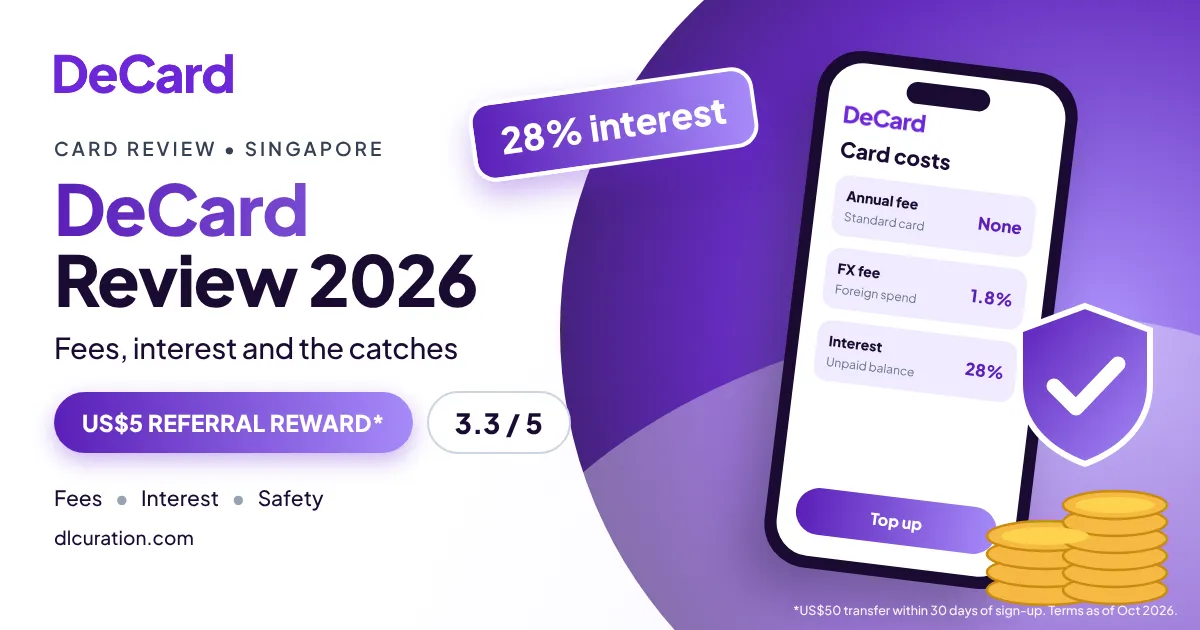
| Foreign currency transactions | 1.8% |
| Stablecoin conversion markup | 0%, at the market rate |
| Inactivity fee | S$5 or US$5 if no customer-initiated transaction for 90 days |
| Interest | 28% a year on the balance unless you pay the statement balance in full |
| Late payment fee | S$50 or US$50 |
A premium DeCard Luminaries card from 13 July 2026 offers 0% FX fees and up to 10% monthly cashback (capped at US$200), with a US$388 annual fee. Details are from the DLCuration page.
Hidden Costs to Know About
The interest rate is high. 28% a year is steep if you carry a balance.
FX is 1.8%. That is higher than 0% FX travel cards.
Idle cards cost money. The inactivity fee applies after 90 days without a customer-initiated transaction.
Core Features: What DeCard Actually Does
Spend Stablecoins at Visa Merchants
You hold stablecoins in your DeCard account and spend them at any Visa merchant. The launch coverage names USDC and USDT.
Rewards
The DLCuration page lists DePoints and a promotion to redeem 500 DePoints for a chance to win up to US$50 cash credit until 31 December 2026. Odds are not published.
The Honest Assessment: What Holds Up and What Does Not
The idea holds up. Spending stablecoins without selling them elsewhere first is convenient.
The credit terms do not. A 28% rate and a S$50 late fee make this a card to pay in full, every time.
There is no deposit insurance. SDIC does not apply to DeCard balances or stablecoins.
Stablecoins carry risk. The value depends on the issuer and the market.
Regulation is not spelled out on the page. Check the issuer’s licence before you load meaningful amounts.
DeCard vs YouTrip vs Crypto.com
| Factor | DeCard | YouTrip | Crypto.com |
|---|---|---|---|
| Type | Stablecoin Visa card with credit feature | Prepaid multi-currency card | Crypto exchange and card |
| FX fee | 1.8% | 0% | Varies |
| Interest on balance | 28% unless paid in full | None | n/a |
See our YouTrip review and Crypto.com Exchange review.
Choose DeCard only if you already hold stablecoins and will pay in full.
Choose YouTrip if you want simple 0% FX travel spending.
Who Should Use DeCard
DeCard is a strong fit if:
- You hold stablecoins and want to spend them.
- You pay the statement balance in full every month.
- You understand the risks of crypto-linked products.
DeCard is not a strong fit if:
- You might carry a balance.
- You want SDIC protection.
- You want the cheapest foreign spending.
Is DeCard Worth It in 2026?
For stablecoin holders who pay in full, it is a handy tool. For everyone else, a normal travel card is simpler and cheaper.
Sign-up offer: through the DLCuration referral code sppEjC, new DeCard Visa and DeCard Luminaries Visa cardholders get US$5 credited to their DeCard account after a transfer of US$50 or more within 30 days of registration. Payout is on the 10th of the following month. The page calls the offer ongoing with no expiry, and DeCard can change it at any time. Rewards can be clawed back if fraud is detected. SGD card holders should check Home then Referral in the app for the amount. See the referral guide.
→ Get the DeCard referral reward
Frequently Asked Questions
Is DeCard safe?
It is issued by DCS Card Centre, formerly Diners Club Singapore, with Standard Chartered as banking partner. But SDIC deposit insurance does not apply to DeCard balances or stablecoins, and the DLCuration page does not state a licence number.
What are DeCard’s fees?
No annual or funding fee on the standard card. FX transactions cost 1.8%, there is a S$5 or US$5 inactivity fee after 90 days, a S$50 late fee and 28% interest on unpaid balances.
Is DeCard a credit card?
It is described as a card product with a credit feature. Pay the statement balance in full to avoid interest.
How much is the DeCard referral reward?
US$5, for a transfer of US$50 or more within 30 days of registration, paid on the 10th of the following month.
Which stablecoins does DeCard support?
The launch coverage names USDC and USDT. Check the app for the current list.
Does DeCard charge a stablecoin conversion markup?
The DLCuration page says 0%, at the market rate.
Final Verdict
DeCard earns 3.3 out of 5 stars.
It earns its marks for the stablecoin spending idea and the lack of annual fee. For holders who pay in full, it is a convenient tool.
The deductions come from the 28% interest, 1.8% FX fee, inactivity fee and the lack of deposit insurance.
Use it only if you hold stablecoins and pay on time.
→ See the DeCard referral page
Would you spend stablecoins on a card, or keep crypto and everyday spending separate? Tell me in the comments.
Continue reading: