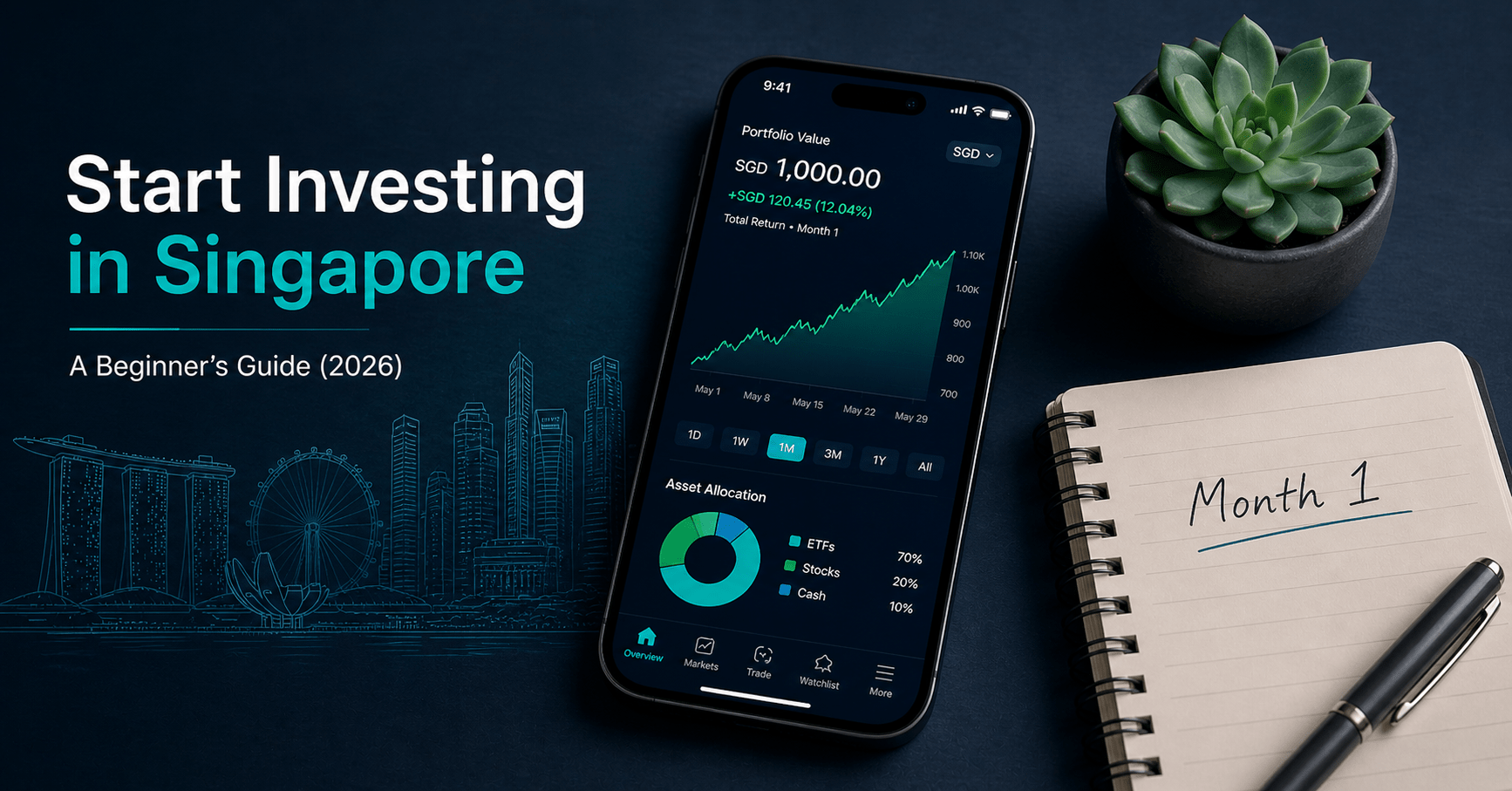
How to Start Investing in Singapore With SGD$1,000 — A Beginner’s Step-by-Step Guide (2026)
Table of Contents
A note before we begin: The content on DLCuration is produced for general informational purposes only. It does not take into account your individual financial situation, goals, or needs. Nothing published here constitutes financial, investment, or trading advice — and it should not be treated as such. While we make every effort to ensure accuracy, DLCuration makes no representation and accepts no liability for any losses that may arise from decisions made based on this content. If you are unsure about any financial decision, please consult a licensed financial adviser.
Most people spend three weeks researching which brokerage account to open. Then they open it, transfer their money in, and stare at the screen — unsure what to actually buy.
The account is not the obstacle. Knowing what to do inside it is.
Investing in Singapore is genuinely more accessible than it has ever been. Zero-commission brokers, fractional shares from S$1, and low-cost index funds available to anyone with an internet connection and a SingPass — these conditions did not exist a decade ago. The tools are good. The confusion is around the sequence: what to do first, what to do second, and what not to do at all.
This guide walks through the actual mechanics — which accounts to open, what to buy with your first SGD 1,000, and what to do in month two and beyond — based on how Singapore’s investing landscape actually works in 2026. It is written for someone starting from zero, not for someone who already has a portfolio and wants to optimise it.
Here is the complete, step-by-step guide.
Why Most Beginners in Singapore Get This Wrong
The most common mistake is not picking the wrong stock. It is starting in the wrong order.
Most beginners do one of three things: they open a brokerage account and buy shares in a company they have heard of (usually a US tech name), they leave the money sitting in the account earning nothing because they cannot decide what to buy, or they try to time the market and wait for a crash that may not come for three years.
All three approaches share the same underlying problem: no framework. Investing without a framework is just expensive guesswork with a brokerage account attached.
The framework that works — and that most long-term investors eventually converge on — is this: solve your financial foundations first, then invest only what you can leave untouched for at least five years, then buy broadly diversified, low-cost assets consistently over time.
That framework is not exciting. It is also consistently how ordinary people build meaningful wealth over a decade.
The 5 Things You Need Before You Open a Brokerage Account
These are not optional prerequisites — they are the difference between investing that compounds and investing that gets derailed by the first life event that costs you money.
1. An emergency fund of three to six months of expenses. This is the single most important financial buffer you can have. Keep it in a high-yield savings account — CIMB FastSaver, Chocolate Finance, or a money market fund — not in a brokerage. If you invest your emergency fund and the market drops 30% the same week your washing machine breaks down, you are forced to sell at the worst time. Solve the buffer first.
2. No high-interest debt. Credit card debt at 26% p.a. interest is a guaranteed negative return. No investment strategy reliably beats that rate. Pay off revolving credit card balances before you invest a single dollar in the market.
3. A clear number for what you can invest. Not “whatever is left over.” An actual number. For most Singapore salaried employees, a reasonable starting point is 10–20% of monthly take-home. If your take-home is SGD 4,000 and you save SGD 800/month, your investable amount is the portion of that SGD 800 you will not need for at least five years.
4. A SingPass account. Every MAS-regulated Singapore broker requires SingPass for identity verification (MyInfo). Have it ready before you start the account opening process — it cuts the application time from 30 minutes to under five.
5. A bank account that can do FAST transfers. Most Singapore brokers are funded via local bank transfer. DBS, OCBC, UOB, and most digital banks all work. Confirm your account can send FAST payments before you start — almost all current accounts can, but it is worth checking.
The Tools You Need
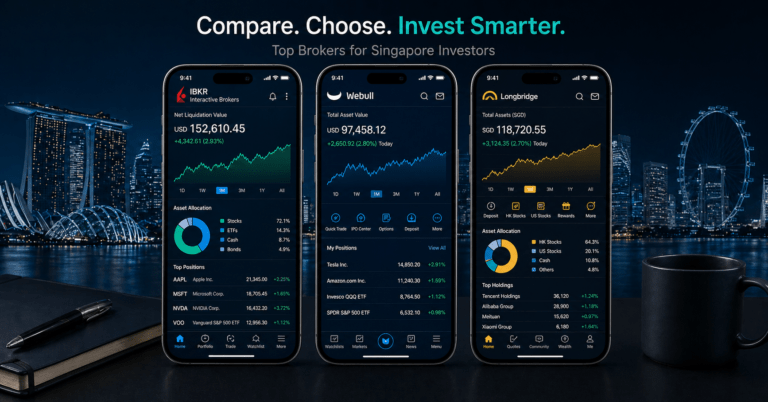
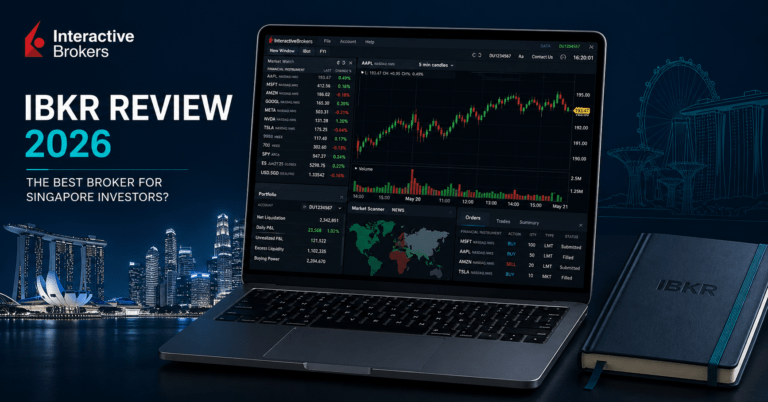
A brokerage account — your primary investing platform. If you are starting with SGD 1,000 and primarily want to buy US and Singapore stocks or ETFs, Webull or Longbridge are the most cost-efficient entry points. For investors who eventually want access to European markets, Japanese equities, or the lowest currency conversion fees on larger transfers, IBKR is the long-term default.
- Webull Singapore (Free to open) — Commission-free US, HK, and SG trading. Cleanest interface for beginners. Welcome reward up to S$1,888 in NVIDIA shares via referral link. Best for new investors starting with SGD 1,000–10,000.
- Longbridge (Free to open) — Commission-free US, HK, and SG trading with Cash Plus idle cash yield. Welcome reward up to SGD 1,300 via referral code UIO57VZ3. Best if you want uninvested cash earning yield from day one.
- Interactive Brokers (IBKR) (Free to open) — Lowest currency conversion fees, 150+ global markets. Best for investors planning to build a larger, internationally diversified portfolio over time.
A regular savings mechanism — a standing instruction to your bank to transfer your monthly investing amount to your brokerage on payday. Remove the decision. Automate the transfer.
A simple tracking spreadsheet — one tab. Date, amount invested, what you bought, current value. Update monthly. Knowing your actual numbers prevents both panic and complacency.
Total monthly cost of this stack: SGD 0. All three brokers have no account fees and no minimum deposit. The only costs are per-trade commissions (zero on Webull and Longbridge; from USD 1.00 per trade on IBKR) and the management fees embedded in any ETFs you buy — typically 0.03–0.5% annually.
The Full Workflow: Step by Step
Step 1 — Confirm Your Emergency Fund Is Set (Before Anything Else) — Week 1
Before you open a brokerage account, confirm that you have three to six months of expenses in a liquid, accessible account — not your CPF, not your brokerage, not a fixed deposit with early-withdrawal penalties.
For the average Singapore resident spending SGD 2,500/month (housing, food, transport, utilities), this means SGD 7,500–15,000 sitting in a savings account you can access without friction.
If you do not have this yet, park your investable amount in a high-yield savings account and build the buffer first. CIMB FastSaver, GXS, and Chocolate Finance currently offer 2.5–3.5% p.a. with no lock-up. Missing this step is the most common reason new investors are forced to sell during market downturns at exactly the wrong moment.
What you end up with: A defined emergency fund in a named account. A clear monthly investing number you know you can commit without touching the buffer.
Time this takes: One afternoon to set up a high-yield savings account if you do not already have one, plus one bank transfer.
Step 2 — Open Your Brokerage Account — Week 1 (30–45 minutes)
Open one account. Not two. Not three. One.
For most beginners, either Webull or Longbridge is the right starting point. Both are MAS-regulated, commission-free on US, HK, and SG equities, and designed for straightforward use. The choice is simple: if you want the highest welcome reward and the cleanest mobile interface, go with Webull. If you want your uninvested cash earning yield from day one through Cash Plus, go with Longbridge.
To open a Webull Singapore account:
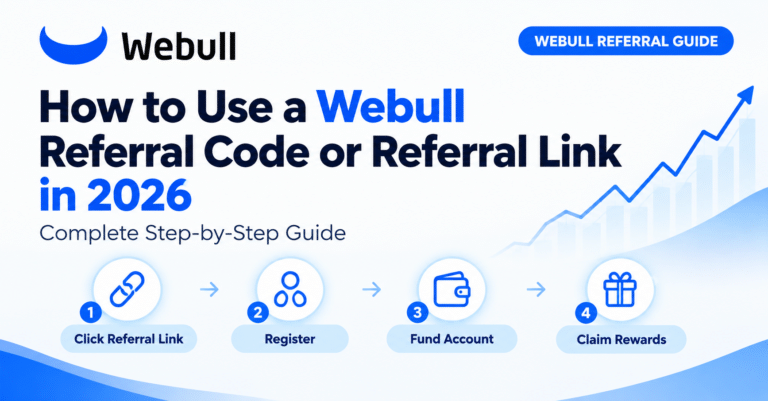
- Click the referral link to pre-activate the welcome bonus
- Download the Webull app and tap “Sign Up”
- Authenticate with SingPass MyInfo — this auto-fills your identity details
- Upload a selfie for face verification (takes two minutes)
- Submit and wait for approval — typically same day or next business day
- Fund via FAST transfer from your bank
To open a Longbridge account:
- Click the referral link or enter code UIO57VZ3 during sign-up
- Download the Longbridge app and tap “Open Account”
- Authenticate via SingPass MyInfo
- Complete the risk assessment questionnaire
- Receive approval — typically within one business day
- Fund via FAST transfer and activate Cash Plus from the app menu
What you end up with: A funded, MAS-regulated brokerage account with a welcome reward unlocked and your first month’s investing amount ready to deploy.
Time this takes: 30–45 minutes including SingPass verification.
Step 3 — Decide What to Buy: The Beginner Framework — Week 2 (2 hours of reading, then a decision)
This is where most beginners overthink and stall. The right answer for most beginner investors is the same answer.
Buy a broad, globally diversified, low-cost index ETF.
Not Singapore stocks. Not a hot sector. Not a company you admire. A single ETF that owns hundreds or thousands of companies across the world — so that no single company’s failure can significantly damage your portfolio.
The two most widely discussed starting ETFs for Singapore investors are:
1. CSPX — iShares Core S&P 500 UCITS ETF (USD, LSE) Tracks the 500 largest US companies. Expense ratio: 0.07% per year. Available on IBKR. The UCITS structure means Singapore investors are not exposed to US estate tax on US equity holdings — unlike the US-listed SPY or VOO, which can trigger 40% estate tax on holdings above USD 60,000 for non-US persons.
2. VWRA — Vanguard FTSE All-World UCITS ETF (USD, LSE) Tracks approximately 3,700 companies across developed and emerging markets globally. Expense ratio: 0.22% per year. Available on IBKR. One ETF that owns the world — if you want maximum diversification in a single holding and never want to add anything else, VWRA allows that.
Note on platform availability: CSPX and VWRA are listed on the London Stock Exchange and are most cost-efficiently bought on IBKR, which offers LSE access. Webull and Longbridge do not offer LSE access. If you are using those platforms, the closest alternatives are US-listed ETFs such as VT (Vanguard Total World Stock ETF) — available commission-free and offering broad global exposure in one holding.
For simplicity when starting with SGD 1,000 on Webull or Longbridge: buy VT on the US market. It is available commission-free, covers thousands of global companies, and requires no LSE access or currency conversion beyond USD.
What you end up with: A clear decision on what to buy — an exact ticker — before you open the trading screen.
Time this takes: Two hours to read and decide. The actual purchase takes under three minutes.
Step 4 — Make Your First Purchase — Week 2 (under 10 minutes)
You have your account. You have your investing amount. You have decided what to buy.
Now execute. Do not wait for the “right moment.” The best time to invest is when you have the money and a clear plan — not when the market looks calm, not when the news is positive. Time in the market consistently outperforms timing the market across every major long-term study of investment returns.
On Webull (buying VT):
- Search the ticker in the search bar
- Tap the stock → tap “Trade” → select “Buy”
- Set order type to “Market” for your first purchase
- Enter the number of shares — or use the fractional share option if your amount is smaller than one full share
- Review and confirm
- Order executes during US market hours (9:30 PM – 4:00 AM SGT)
On IBKR (buying CSPX or VWRA):
- Log into the Client Portal or IBKR Mobile
- Search “CSPX” → select the LSE-listed version
- Set order type to “Limit” at the current asking price
- Enter the number of shares → confirm
- Orders execute during London Stock Exchange hours (3:00 PM – 11:30 PM SGT)
What you end up with: Your first investment — a stake in a fund that owns hundreds of the world’s largest companies.
Time this takes: Under 10 minutes, including looking up the current share price.
Step 5 — Set Up Monthly Automation — Week 2 (20 minutes)
One purchase is not investing. A system is.
Set up two automations immediately after your first purchase:
Automation 1 — Bank to brokerage transfer. Create a standing instruction in your bank app to send your monthly investing amount to your brokerage on the first working day after your salary arrives. Take the decision out of your hands every month.
Automation 2 — Monthly purchase reminder. Set a recurring calendar event — “Invest this month” — for the same date each month. When it fires, log into your brokerage and buy more of what you already own. This is dollar-cost averaging: investing a fixed amount each month regardless of whether the market is up or down.
That calendar event is your entire ongoing time commitment. Once per month, 10 minutes, same action every time.
What you end up with: A system that invests automatically without requiring willpower, market-timing judgment, or a monthly decision about whether conditions are right.
Time this takes: 20 minutes to set up. Zero decisions per month after that beyond the monthly purchase itself.
The Full Time Breakdown
| Step | Task | Manual / Old Approach | This Workflow |
|---|---|---|---|
| 1 | Build emergency fund | Weeks of indecision | One afternoon — open high-yield savings, automate transfer |
| 2 | Open brokerage account | Multiple visits to a bank branch | 30–45 mins via app with SingPass MyInfo |
| 3 | Decide what to buy | Months of paralysis, hot tips, forum rabbit holes | 2 hours reading → one ETF decision |
| 4 | First purchase | Waiting for the “right moment” (weeks to years) | Under 10 minutes once you have decided |
| 5 | Monthly system | Ad hoc, emotional, inconsistent | 20 mins setup once → 10 mins/month thereafter |
| Total ongoing commitment | Hours per week | 10 minutes per month |
What Investing Cannot Do (And Should Not Try To)
It cannot replace a missing emergency fund. Markets fall 30–40% in downturns. If your brokerage account is also your emergency buffer, you will be forced to sell at the worst time. The buffer is not optional.
It cannot fix a savings rate problem. Investing SGD 200/month in a high-cost Singapore environment will build something — but slowly. The most impactful lever for most early-career investors is increasing income and reducing fixed costs, not optimising investment returns.
It cannot guarantee short-term outcomes. A five-year horizon is the minimum for equity investing to have a strong historical probability of positive real returns. Money you need within three years belongs in a savings account or Singapore Savings Bonds — not the stock market.
It cannot replace professional advice for complex situations. If you have significant CPF decisions, estate planning needs, or complex tax situations, a fee-based financial planner is worth the cost. The framework in this guide is designed for straightforward situations — single income, no dependents, cash investing only. Your situation may be different.
Tips for Better Results From This System
Do not look at your portfolio daily. Checking daily is the fastest way to make emotional decisions. Check monthly when you make your purchase. Review quarterly. That is sufficient.
Ignore market news during the first 12 months. Every week the financial press will tell you the market is either dangerously high or about to crash. Neither call is consistently accurate enough to act on. Your job is to buy consistently and not interfere.
Increase your contribution rate before adding more ETFs. Most beginners think diversification means more tickers. For someone starting with SGD 1,000, one global ETF is sufficient diversification. Adding a second and third ETF does not meaningfully improve your risk profile — it adds complexity without proportional benefit. Increase your monthly contribution amount first.
Use SGD-denominated purchases where possible. SGX-listed ETFs in SGD save you one FX conversion step. At small amounts, the difference is minor. At larger amounts and higher frequencies, it becomes meaningful.
Do not sell during a 20% drawdown. Market corrections of 10–20% happen roughly every two years historically. A 30%+ crash happens every seven to ten years. Neither event changes the underlying businesses inside a broad index fund. Doing nothing during a drawdown is the skill most investors never develop. It is harder than it sounds, and more valuable than almost any other investing skill you could learn.
The Budget Version of This Workflow
If SGD 1,000 is a stretch and you want to start with less, this still works:
- Account: Webull — no minimum deposit, fractional shares from S$1
- First ETF: VT on Webull — buy fractional shares of a global ETF with whatever amount you have
- Monthly contribution: As low as SGD 50 — it compounds slowly at first, but the habit is more important than the amount in year one
- No IBKR needed yet: Wait until your monthly investment amount exceeds SGD 500 consistently, at which point the USD 1.00 minimum commission becomes proportionally small enough to justify it
The budget version costs nothing to set up and gets you in the market. In year one, that is the only thing that matters.
Frequently Asked Questions
How much money do I need to start investing in Singapore?
Technically, you can start with S$1 on platforms like Webull that offer fractional shares. In practice, the minimum that makes transaction costs and account management worthwhile is around SGD 100–500 for a first purchase, building to SGD 300–1,000 per month as a recurring contribution. The amount matters less than starting consistently and increasing it over time.
Should I invest in Singapore stocks or US stocks first?
For most beginners, a globally diversified ETF — such as VT or VWRA — is simpler and more diversified than picking individual Singapore stocks. The Singapore market is heavily concentrated in banks and REITs. US markets give you technology, consumer, and healthcare sector exposure that the STI does not. A single global ETF gives you both without requiring you to pick individual stocks in either market.
Can I invest my CPF money through these brokers?
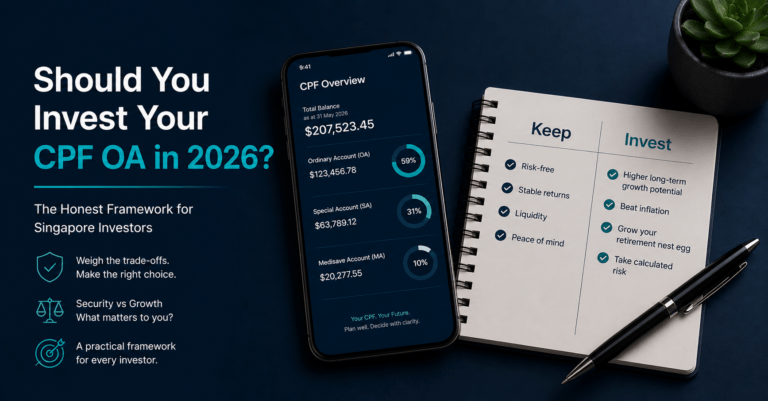
No. IBKR, Webull, and Longbridge do not support CPF Investment Scheme (CPFIS) accounts — these require a separate application through a CPFIS-approved bank such as DBS, OCBC, or UOB. Cash in your CPF Ordinary Account currently earns 2.5% p.a., guaranteed and risk-free. Whether to invest your CPF OA involves meaningful trade-offs — covered separately in the linked guide below.
What is the difference between VT and VWRA for Singapore investors?
VT is US-listed on NYSE Arca, denominated in USD, and charges 0.07% annually. VWRA is UK-listed on the London Stock Exchange, also in USD, charges 0.22% annually, but uses a UCITS fund structure. For non-US investors, UCITS funds avoid exposure to US estate tax — which can reach 40% on US-listed fund holdings above USD 60,000 for non-US persons. At small starting amounts the difference is negligible and VT on Webull is perfectly practical. For larger portfolios, VWRA’s UCITS structure matters.
How do I know my brokerage is safe and my money is protected?
IBKR, Webull, and Longbridge are all regulated by MAS under Capital Markets Services licences. MAS requires licensed brokers to hold client assets separately from company assets — meaning your securities are not part of the company’s estate if it fails. Cash in a brokerage account is generally not covered by the Singapore Deposit Insurance Corporation (SDIC), which covers bank deposits only. Securities you own remain yours as a separate legal matter regardless of the broker’s financial position.
How long before I see meaningful returns?
This depends on your contribution rate, how consistently you invest, and what markets do — none of which you fully control. What you can control: starting, contributing monthly, not selling during downturns, and increasing contributions when income grows. Historical data for globally diversified equity index funds shows positive real returns over any rolling 10-year period in the past century. The compounding effect becomes clearly visible around years five to seven. Year one looks quiet. Year ten does not.
Final Thoughts
Investing SGD 1,000 in Singapore is not a complex problem. The complexity is manufactured — by financial products that are difficult to compare, by news cycles that frame every market movement as a crisis, and by the general sense that you need to know more before you start.
You do not need to know more. You need a clear framework and the discipline to execute it monthly.
The framework in this guide — emergency fund first, one brokerage account, one globally diversified ETF, monthly automation — will outperform the majority of active investing strategies over a 10-year horizon. Not because it is clever. Because it is consistent, low-cost, and does not require you to be right about markets at any specific moment.
The most important investment decision you will make is not which stock to buy in month one. It is whether you keep investing in month 13 — when the market is down 15% and the news is grim.
Start now. Automate it. Leave it alone.
Reminder: Nothing in this guide constitutes financial or investment advice. The information is provided for general educational purposes only. Your financial situation is unique — if you are unsure about any decision, consult a licensed financial adviser before acting.
→ Open a Webull Singapore account
→ Open a Longbridge account with code UIO57VZ3
→ Open an IBKR account for global market access
Are you starting your investing journey this year, or have you been at it for a while? Drop the one thing you wish someone had told you at the beginning — it is the most useful thing you can leave for the next reader.
Continue reading:
One Comment